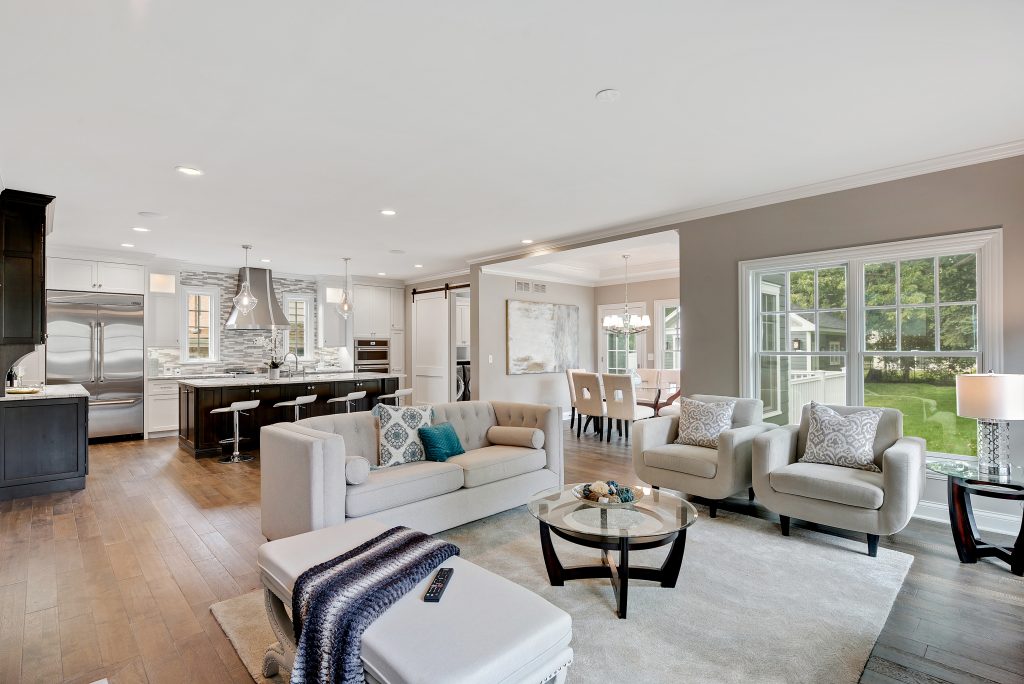
Open-concept living has become a hallmark of modern home design. By removing walls and barriers, these spaces create a sense of airiness, flexibility, and connection that feels especially appealing in today’s homes. Natural light travels more freely, sightlines expand, and everyday living becomes more fluid.
But with that openness comes a unique design challenge: how do you create definition without disrupting the flow?
For design-conscious homeowners, the answer often lies underfoot. Hardwood flooring and thoughtfully placed rugs offer a subtle yet powerful way to establish structure within an open-plan layout, guiding movement, anchoring furniture, and creating distinct “rooms” without ever needing a wall.
The beauty of hardwood flooring in open spaces is its ability to unify. Running a consistent material throughout creates a seamless foundation that visually expands the space and allows each area to feel connected. It sets a tone of continuity, making even large layouts feel cohesive and intentional.
That said, continuity doesn’t have to mean monotony. Variations in plank width, finish, or installation pattern can introduce just enough interest to keep the floor from feeling flat. A matte or low-sheen finish, for example, offers a more modern, understated look while helping to soften reflections in large, sun-filled areas.
The real opportunity for definition comes when you begin layering rugs into the space.
Rugs act as visual anchors, helping to carve out zones within an open layout. In a living area, a well-sized rug can frame a seating arrangement, creating a sense of intimacy even within a larger footprint. It signals where the space begins and ends, making it feel more grounded and purposeful.
Scale is key. A rug that’s too small can make a space feel disconnected, while one that’s appropriately sized brings everything together. Ideally, front legs of sofas and chairs should sit on the rug, allowing the entire seating area to feel unified rather than fragmented.
In dining areas, rugs serve a slightly different function. They define the space while also adding a layer of softness underfoot. The rug should extend beyond the table far enough to accommodate chairs, even when they’re pulled out. This ensures both comfort and visual balance, maintaining the clean lines that make open-concept spaces so appealing.
Material choice matters here, especially in high-traffic areas. Flatweaves and low-pile rugs tend to perform well under dining tables, offering durability and ease of maintenance while still contributing to the overall design.
Color and pattern play a significant role in how these zones are perceived. In an open-plan space, rugs don’t need to match exactly, but they should feel connected. This can be achieved through a shared color palette, complementary tones, or repeating motifs that create a sense of rhythm throughout the home.
For example, a neutral rug in the living area might be paired with a more patterned piece in the dining space, as long as they share similar undertones. This approach keeps the design cohesive while allowing each area to have its own identity.
Layering textures adds another dimension. Pairing the natural warmth of hardwood with the softness of a woven rug creates contrast that feels both inviting and refined. In summer, lighter materials like cotton or jute can enhance the airy feel of the space, while still providing the structure needed to define different zones.
Traffic flow is another important consideration. Open layouts often serve multiple functions, from entertaining to everyday family life. Rugs can help guide movement, subtly indicating pathways without the need for physical barriers.
Placing rugs in areas where people naturally gather like around seating, dining, or even a reading nook, helps organize the space in a way that feels intuitive. At the same time, leaving clear pathways between these zones ensures that the openness of the layout is preserved.
Furniture placement works hand-in-hand with flooring to reinforce these divisions. Rugs should align with the layout of the furniture, not compete with it. When everything is positioned thoughtfully, the result is a space that feels both structured and effortless.
Lighting also influences how defined each area feels. Natural light can highlight the transitions between hardwood and rugs, while well-placed fixtures like pendant lights over a dining table or a floor lamp in a seating area, help reinforce the purpose of each zone.
The goal is to create subtle distinctions that feel intentional rather than forced. When done well, these layers of design work together to give each area its own presence, while still maintaining the openness that makes the layout so appealing.
One of the advantages of using rugs to define spaces is flexibility. As your needs change, whether it’s rearranging furniture, updating decor, or adapting the space for different seasons, rugs can be moved or replaced with ease. This allows your home to evolve without requiring major changes to the underlying flooring.
Hardwood, on the other hand, provides the enduring foundation that ties everything together. Its timeless appeal ensures that no matter how your design preferences shift, the space will always feel grounded and cohesive.
Ultimately, designing an open-plan space is about balance. It’s about embracing the openness while introducing just enough structure to make each area feel intentional. Hardwood flooring and rugs offer a way to achieve that balance – combining continuity with definition, and simplicity with depth.