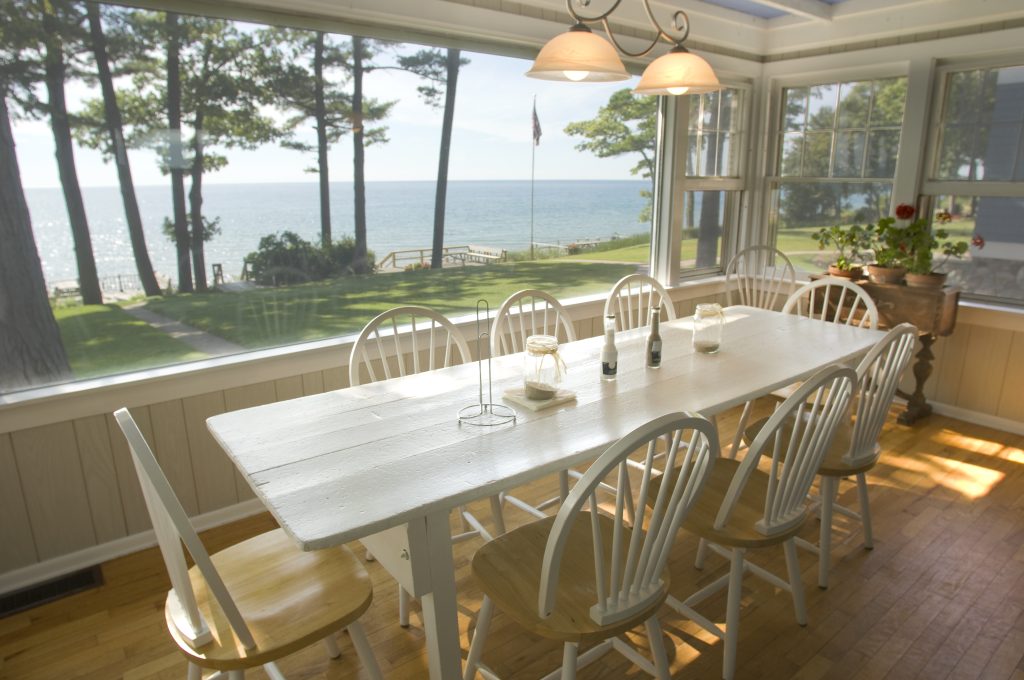
There’s something inherently calming about life by the water. Whether it’s the sound of waves rolling in or the stillness of a quiet lake at sunrise, these homes are designed to feel effortless. Doors stay open longer, sunlight fills every corner, and the boundary between indoors and out begins to disappear.
But while waterfront living is relaxed in spirit, it can be demanding on your home, especially your floors. Sand gets tracked in, water drips from swimsuits and towels, and humidity lingers in the air. The challenge is finding flooring that captures that light, airy aesthetic while standing up to the realities of daily life near the water.
Waterproof flooring offers a solution that feels both practical and elevated. It allows you to create a cohesive, beautifully designed space without constantly worrying about damage, maintenance, or wear.
Luxury vinyl plank has quickly become a favorite in beach houses and lake homes, and it’s easy to see why. It brings the warmth and texture of natural wood into a space, but without the vulnerabilities that come with traditional hardwood. In environments where moisture is a constant, that distinction matters. Waterproof by design, LVP handles everything from wet feet to unexpected spills without warping or staining.
Visually, it aligns seamlessly with waterfront design. Soft oak tones, weathered finishes, and subtle gray hues reflect the colors of sand, driftwood, and sky. Wide planks enhance the sense of openness, helping rooms feel larger, brighter, and more connected to their surroundings. The result is a space that feels refined, but never overdone – exactly what a home by the water should be.
Tile offers a different, but equally compelling, approach. Long appreciated for its durability, it has evolved into a design-forward option that works beautifully in waterfront homes. Porcelain and ceramic tile are naturally waterproof, making them ideal for areas where moisture is unavoidable like in entryways, kitchens, bathrooms, and anywhere that serves as a transition from outdoors to in.
What makes tile especially appealing today is its versatility. Large-format tiles create a clean, seamless look, while textured finishes add depth without overwhelming the space. Wood-look tile has become particularly popular, offering the visual warmth of wood with the resilience of tile. Underfoot, it stays cool – a small but welcome luxury during warmer months.
For homeowners looking for a balance between performance and value, waterproof laminate has emerged as a strong contender. Advances in technology have transformed laminate into a material that not only looks more realistic but also performs far better in moisture-prone environments. Its protective surface resists scratches and stains, while its water-resistant core adds an extra layer of durability.
In a lake home or beach house that sees frequent guests, this can make a meaningful difference. It allows you to maintain a polished, cohesive look throughout living spaces and bedrooms without the constant upkeep that more delicate materials require. It’s a practical choice but one that still feels intentional and design-driven.
What truly defines a well-designed waterfront home, though, is the way it connects to the outdoors. Flooring plays a central role in that experience. When materials flow naturally from one space to another, the entire home feels more open and inviting.
Waterproof flooring makes that continuity possible. Indoors, wood-look planks or stone-inspired tiles can echo the textures found just beyond your doors. The transition feels seamless, not staged. Layering in indoor-outdoor rugs near entry points or gathering areas adds softness and comfort, while also helping to manage the inevitable sand and debris that come with waterfront living.
Texture is where these spaces really come to life. While the flooring itself often serves as a neutral foundation, it creates the perfect backdrop for layered design. Woven rugs, natural fibers, and soft textiles bring warmth and dimension without competing with the simplicity of the setting. Jute, sisal, and cotton all feel at home here – organic, relaxed, and effortlessly stylish.
Color plays a similar role. The most compelling beach and lake interiors don’t rely on bold statements; instead, they draw inspiration from the landscape itself. Pale wood tones, sandy neutrals, soft whites, and muted grays reflect natural light and create a sense of calm. These shades allow the view outside to take center stage while still providing a polished interior backdrop.
That’s not to say there’s no room for contrast. Deeper tones can be used thoughtfully to anchor a space or add visual interest, particularly in larger, open areas. The key is balance, letting the flooring support the overall design rather than compete with it.
Perhaps one of the most appealing aspects of waterproof flooring is how little it asks of you. Maintenance is simple and intuitive, which is exactly what you want in a home that’s meant to be enjoyed. A quick sweep keeps sand and debris at bay, and an occasional mop restores the surface with minimal effort. There’s no need for special treatments or constant attention.
This ease becomes even more valuable in second homes or spaces that host frequent visitors. It allows you to focus on what matters like gathering with family, spending time outdoors, and enjoying the rhythm of life by the water without feeling tied to upkeep.
Choosing the right flooring in a waterfront home is ultimately about more than durability or design alone. It’s about creating a space that feels aligned with the way you live. A space that welcomes activity without showing wear, and reflects natural beauty without feeling overly curated.
Waterproof flooring makes that balance possible. It supports the relaxed, open nature of beach and lake living while maintaining a sense of refinement that design-conscious homeowners value.