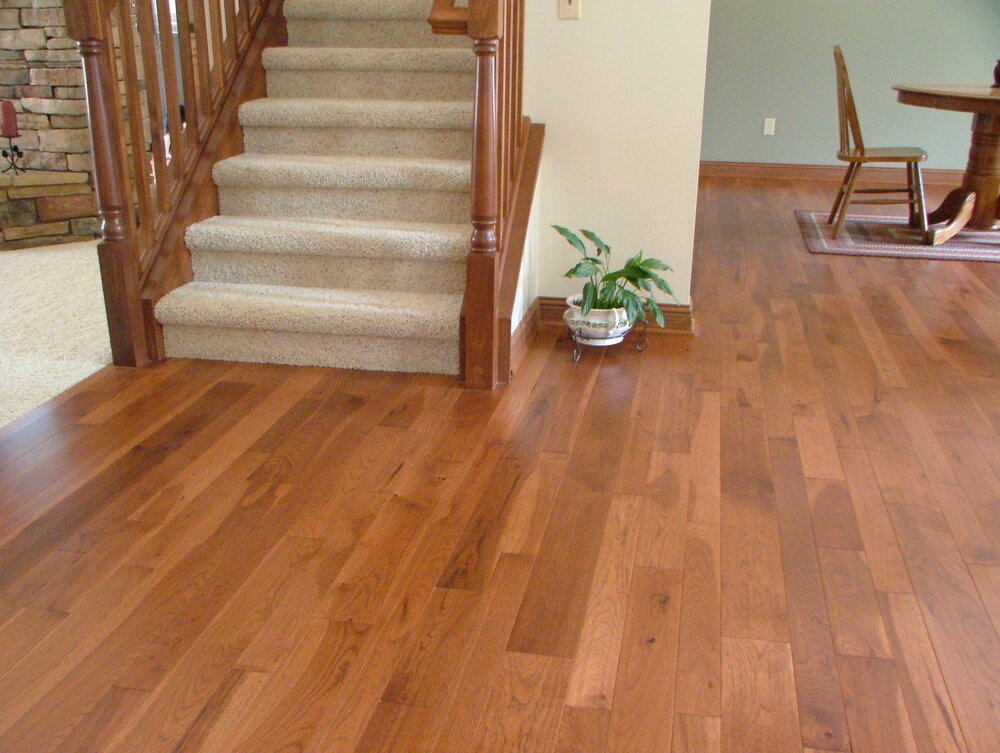
Hardwood flooring is a timeless favorite among many homeowners. It offers natural beauty, long-term durability, and a rich aesthetic that can elevate nearly any interior style. But in the age of sustainability, many buyers are taking a second look at hardwood—wondering if it aligns with their environmental values.
There’s a lot of information (and misinformation) circulating about the environmental impact of hardwood floors. Some claim it contributes to deforestation, while others praise it as a sustainable, renewable option. So, what’s true—and what’s not?
In this blog, we’re separating myths from facts to help you make a more informed, eco-conscious decision about hardwood flooring for your home.
Myth #1: Hardwood Flooring Is Always Bad for the Environment
Fact: Responsible sourcing makes all the difference.
It’s true that not all hardwood flooring is created equal. Unsustainable logging practices can lead to deforestation and long-term ecological damage—but many modern hardwood options are sourced responsibly from managed forests. In fact, sustainable forestry practices are designed to ensure that for every tree harvested, another is planted or naturally regenerated.
Look for certifications like:
- FSC (Forest Stewardship Council): Guarantees wood is sourced from forests that are managed responsibly, with strict environmental and social standards.
- PEFC (Programme for the Endorsement of Forest Certification): Another trusted label that ensures sustainable forest management.
Bottom line: When hardwood is sourced from certified forests, it can be a renewable, environmentally responsible flooring choice.
Myth #2: Engineered Hardwood Is More Eco-Friendly Than Solid Hardwood
Fact: It depends on the construction and sourcing of both.
Engineered hardwood is often marketed as a greener option because it uses a thinner layer of real hardwood bonded over layers of plywood or high-density fiberboard (HDF). This construction can maximize the use of hardwood trees by creating more planks per log.
However, not all engineered hardwood is equal. Some use formaldehyde-based adhesives, which can off-gas volatile organic compounds (VOCs) into your home. Others may be constructed from non-sustainably sourced wood layers.
If you’re choosing engineered hardwood, look for:
- Low- or zero-VOC adhesives
- FSC certification for all layers, not just the top veneer
- Manufacturers with environmental commitments
Solid hardwood, on the other hand, is a natural, single-material product that can last for decades—or even centuries—if maintained properly. It can also be refinished multiple times, extending its life far beyond many synthetic options.
Bottom line: Both solid and engineered hardwood can be sustainable—what matters most is how they’re sourced and manufactured.
Myth #3: Hardwood Flooring Contributes Heavily to Carbon Emissions
Fact: Wood is a natural carbon sink.
Trees absorb carbon dioxide as they grow, storing it in their trunks, branches, and roots. When harvested and turned into products like flooring, that carbon remains locked in the wood for the life of the material. This makes wood one of the few building materials that can have a net positive impact on carbon storage—when harvested responsibly.
Additionally, hardwood flooring often has a longer lifespan than other flooring types, reducing the need for replacement and minimizing the total environmental impact over time.
Bottom line: Properly sourced wood products can help mitigate carbon emissions, especially when used in long-lasting applications like flooring.
Myth #4: Bamboo or Cork Are Always More Sustainable Than Hardwood
Fact: These materials have their own environmental considerations.
Bamboo and cork are popular for their eco-friendly appeal—and for good reason. Bamboo grows quickly and regenerates without replanting, while cork is harvested from the bark of the tree without cutting it down.
But even these materials have their environmental trade-offs:
- Bamboo is often grown in China, and transportation emissions can add to its carbon footprint.
- Some bamboo products use formaldehyde-based adhesives, similar to engineered hardwoods.
- Cork production is more limited, and not always suitable for every climate or application.
When it comes to sustainability, local sourcing and long-term performance matter just as much as the raw material.
Bottom line: Bamboo and cork can be sustainable, but so can hardwood—especially if it’s locally sourced and responsibly harvested.
Myth #5: All Hardwood Flooring Finishes Are Harmful to Indoor Air Quality
Fact: Low-VOC finishes and natural oils are widely available.
Older hardwood floors were often finished with high-VOC polyurethanes that released harmful chemicals into the air. Today’s flooring industry has made major strides in reducing VOC emissions.
Look for:
- Water-based polyurethane finishes
- Natural oil or wax finishes
- Products certified by GREENGUARD or FloorScore for indoor air quality
Choosing hardwood with a safe, low-emission finish is key for a healthy home—especially in bedrooms, nurseries, or homes with pets.
Bottom line: Modern finishes make hardwood a safe, low-emission choice for indoor environments.
Myth #6: Hardwood Floors Waste Trees That Could Be Left Alone
Fact: Forest management is often better than forest neglect.
Forests are dynamic ecosystems. Without active management, trees can become overcrowded, diseased, or more vulnerable to wildfires. Sustainable forestry helps maintain biodiversity, supports local economies, and ensures the long-term health of the forest.
Additionally, hardwood flooring production often utilizes:
- Fallen or dead trees
- Smaller trees that wouldn’t be used for construction lumber
- Wood byproducts from other manufacturing processes
Bottom line: When done responsibly, harvesting wood supports forest health and regeneration.
For design lovers who also care about sustainability, hardwood flooring offers a rare combination of beauty, performance, and eco-consciousness—if you choose wisely.
By focusing on responsibly harvested materials, non-toxic finishes, and products with legitimate environmental certifications, you can enjoy the warmth and elegance of hardwood while aligning with your green values.